Статьи
Source: https://medinskiy.ru/article/budut-zhit-28.
THE 28 SHALL LIVE

New about the feat of the Panfilov’s heroes
On December 5, 1941 the Soviet counteroffensive at Moscow began. The Battle of Moscow was Nazi Germany's first strategic defeat in World War II, or rather, since 1938, the beginning of Hitler's military expansion... Everything connected with the memory of the people who defended Moscow is precious. The recently declassified archival materials of the FSB are another historical sensation.
What We Know
The most legendary episode of the legendary Battle of Moscow was the battle of "28 Panfilov’s heroes". What do we know about it? On November 16, 1941 soldiers of Panfilov's division stopped the advance of several dozens of German tanks at the Dubosekovo passing track at the cost of their lives, almost without the support of artillery. Twenty-eight soldiers were "posthumously awarded the title of Hero of the Soviet Union". This episode was one of the cornerstones, on which the Soviet propaganda, the ideological "indestructible wall" around Moscow was based. The episode became known thanks to two articles in the newspaper “Krasnaya Zvezda”: "The Testament of 28 Fallen Heroes" of November 28, 1941, and "About 28 Fallen Heroes" of January 22, 1942, by A. Krivitsky.
From time to time, thanks to the efforts of various archivists and publicists an alternative version of events near the Dubosekovo passing-track emerges. Here’s the short story: there were fights near Volokolamsk, but the battle of 28 Panfilov's men is 100% a product of journalist Krivitsky’s fantasy. This version is based on the 1948 investigation by the Military Prosecutor's Office (here’s the link).
The opponents of this "alternative story" as presented by the prosecutor's office have clear counterarguments: this investigation took place 7 years after the events, it was politically biased, because a new wave of repressions against generals was being prepared, dirt was being collected on Zhukov, who commanded the troops near Moscow, etc.
We’ve always believed that there was a feat. The number of Panfilov's men cannot be established precisely. But the fighting in that area was hell. It’s obvious that the journalist Krivitsky got confused or was confused by someone…
As for the "Battle of 28 at Dubosekov" – it’s a legendary story. It’s hard to figure out all the details, and it’s just immoral to dig into them. People died honestly for their homeland. This overlaps all possible exaggerations. Or understatements.
Journalist Krivitsky couldn’t have it any other way - in that mishmash of snow, blood, panic, cruelty, astonishing self-sacrifice and cowardice, heroism and despair, millions of tons of metal and villages and suburbs burned to the ground, hundreds of thousands of soldiers and crowds of refugees, all that hellish nightmare of war that were the battles near Moscow in the fall and winter of 1941
But pay attention!
Now we can put an end to it. The Russian Military Historical Society spent the last two years searching the archives. And we got lucky. In the fall of 2018, a case under the "SMERSH" (Spies Must Die) stamp of 1942-1944 was declassified, and we found:
- 3 new evidences that the battle of the 28 Panfilov's men did take place;
- 2 new descriptions of the battle;
- numerous details of the feat (for example, the words of political commander Klochkov "We have nowhere to retreat").
We’ve always talked about the battle and the 28 Panfilov's men more as a symbol. But these documents testify in favor of the factual reliability of the "Red Star" version even more than everyone thought before.
What's the case?
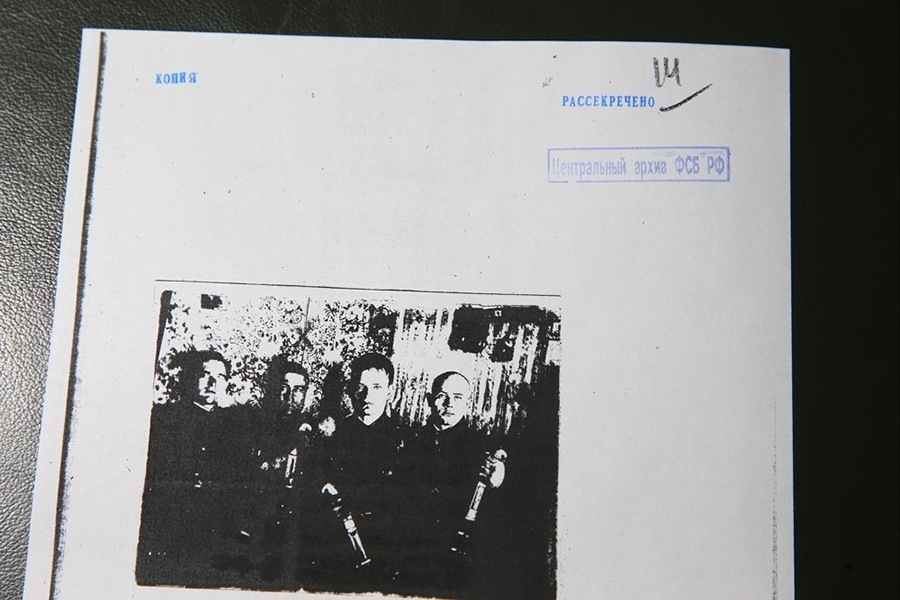
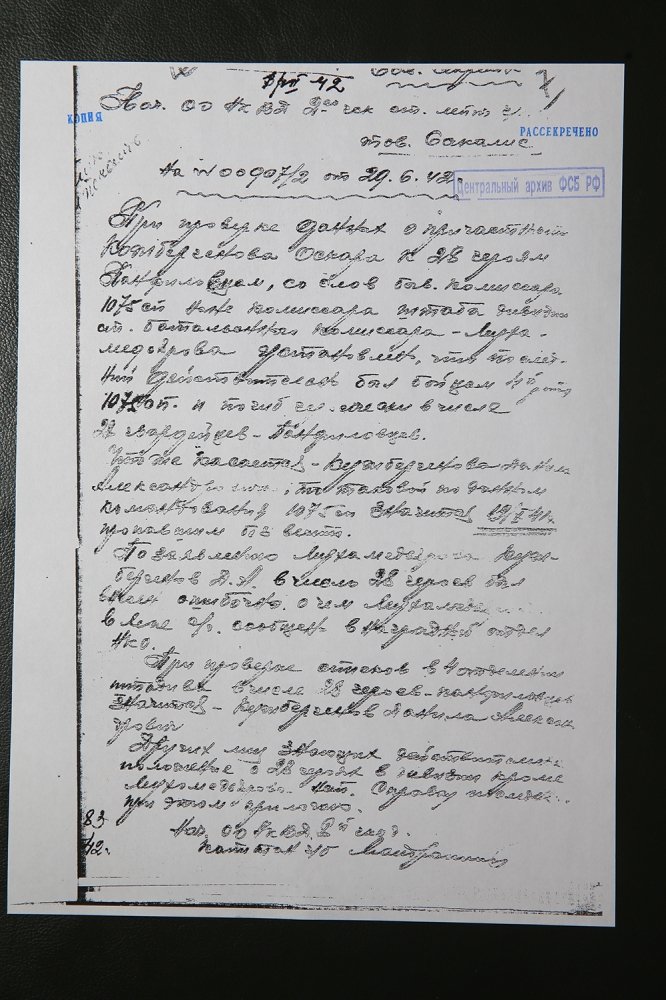
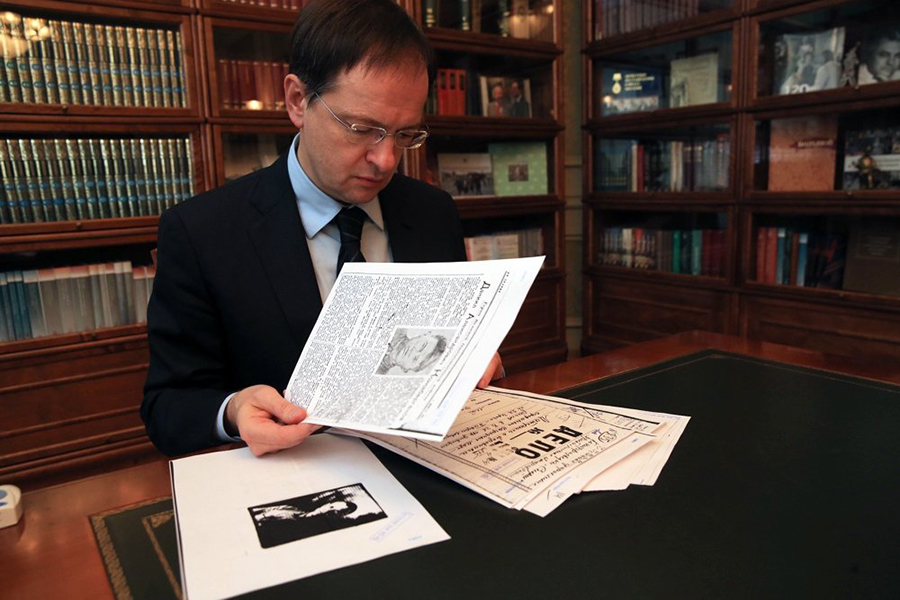
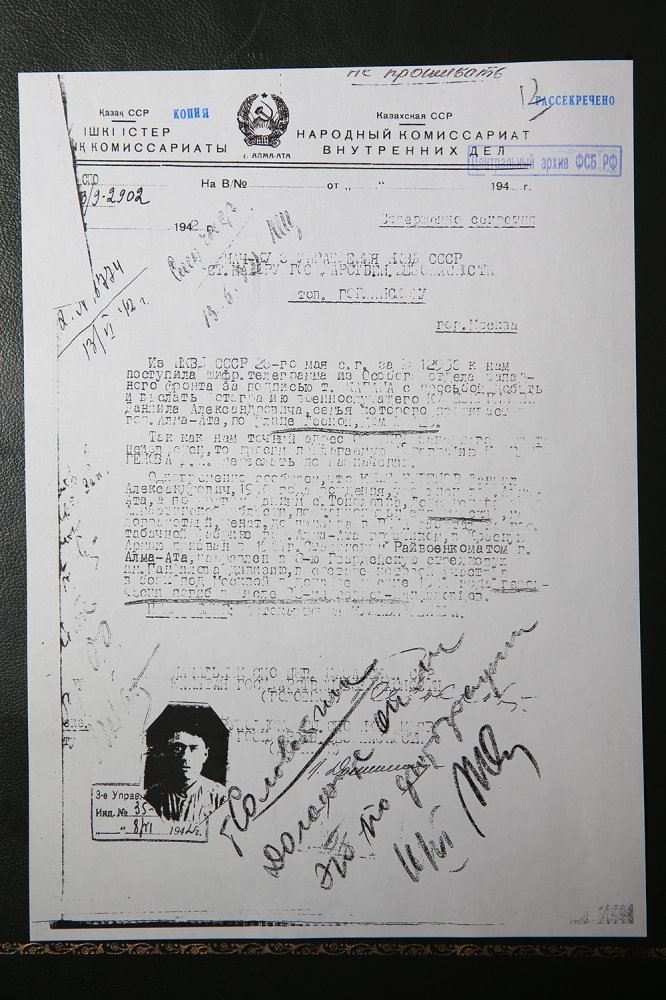
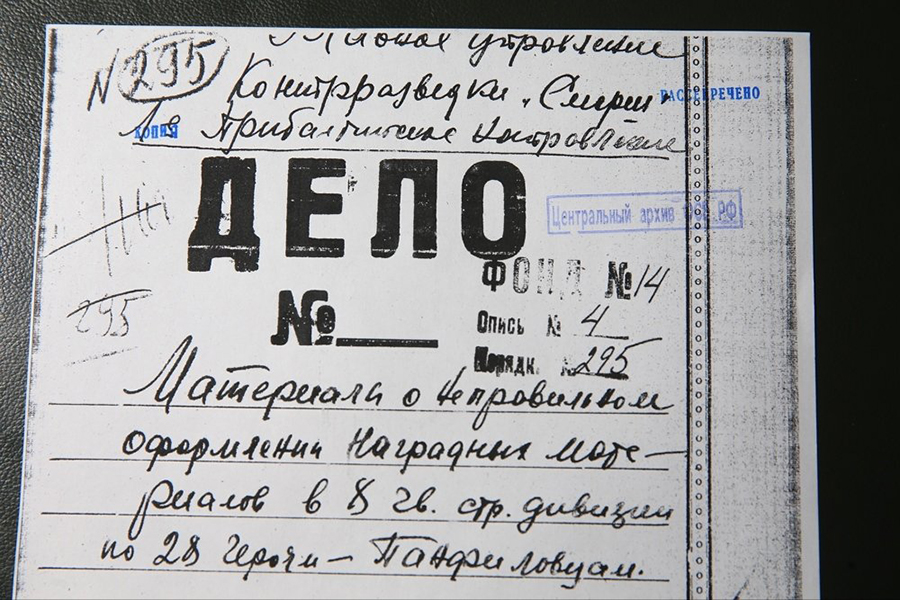
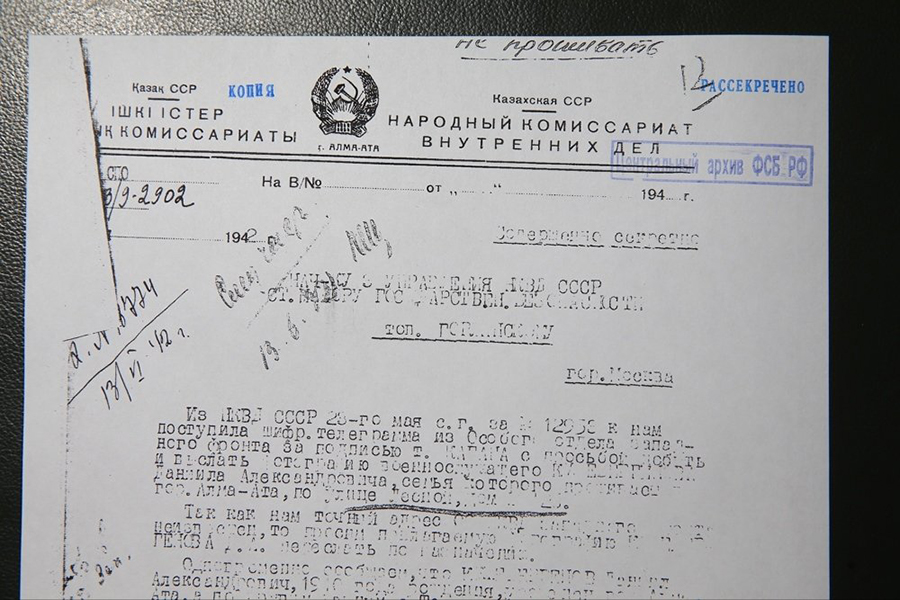
In my hands I’m holding a copy of materials from the folder labeled "Main Directorate of Counterintelligence 'Smersh', 1st Baltic Direction". The case dragged on for two years: it was opened by the Special Department of the NKVD and closed by "Smersh". The case materials were reported to Abakumov personally. This investigation, in contrast to the above-mentioned, was held "hot on the trail", in the spring and summer of 1942.
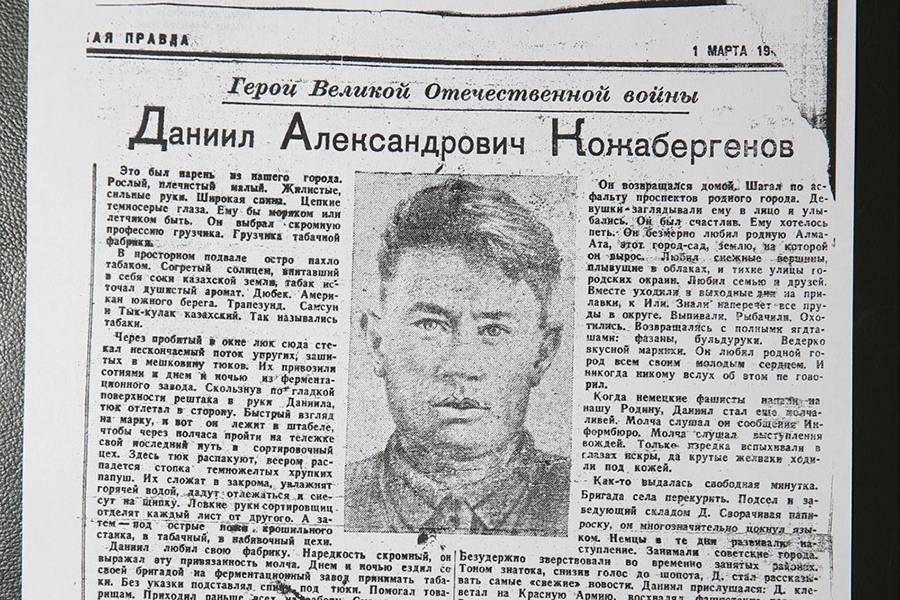
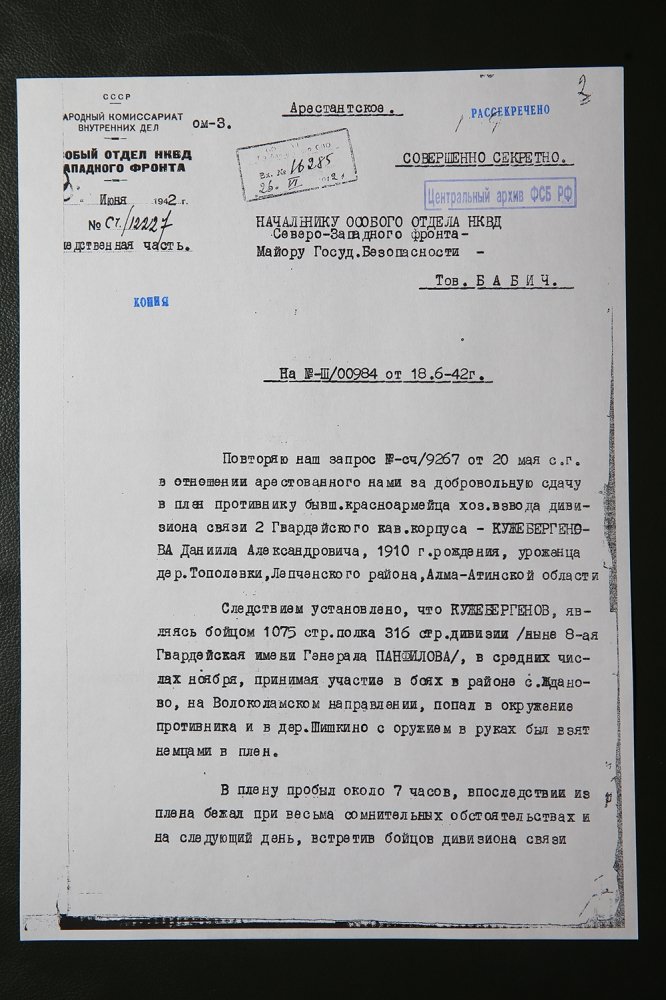
It started like this. The Red Army soldier Kuzhebergenov Daniel was arrested. The Special Forces suspected that "in the middle of November on Volokolamsk direction" he voluntary surrendered with the weapon in his hands, however, in 7 hours he escaped from captivity "under very doubtful circumstances" (Head of NKVD of the Western Front, 23.06.1942). A soldier with such surname was listed in the list of 28 heroes as lost! Moreover, after the arrest "Kuzhebergenov claimed that he participated in the feat of 28 heroes, but has subsequently renounced the statements" (from the report to the chief of Management of Special departments of NKVD of the USSR Abakumov, 25.07.1942).
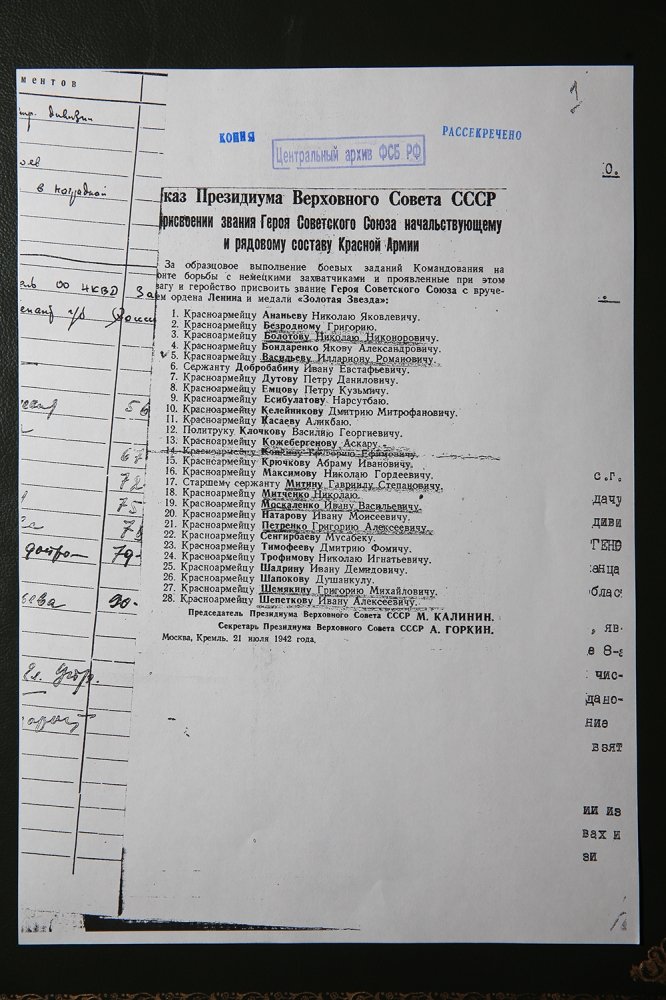
As a result, another Kuzhebergenov - Askar - was awarded the title of Hero of the Soviet Union (posthumously) among the 28. They started checking other names in the list of heroes, and found other inaccuracies. They started to check all the circumstances of the battle and whether the correspondent of the Red Star Krivitskiy had written everything down in good faith.
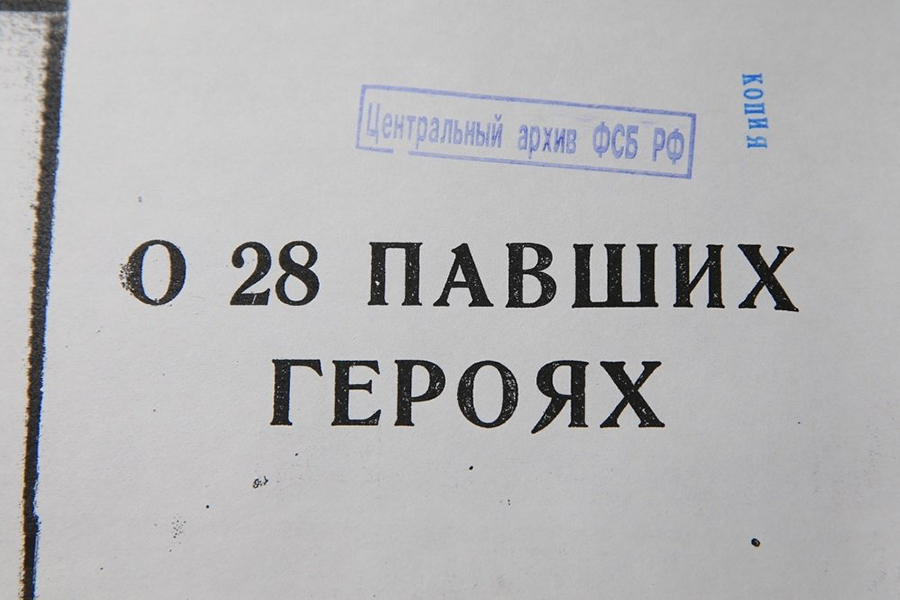
Here’s the general outline of the documents from the declassified folder "about the improper execution of award materials for the 28 Panfilov Heroes". At first the case painfully reminds of the future investigation of the General Prosecutor's Office in 1948. It also began with the investigation of a Panfilov’s man, which survived, was captured and escaped... But that was it. Because, as it was ascertained by counterintelligence, there was a concrete battle. And it was described by Krivitsky very close to reality.
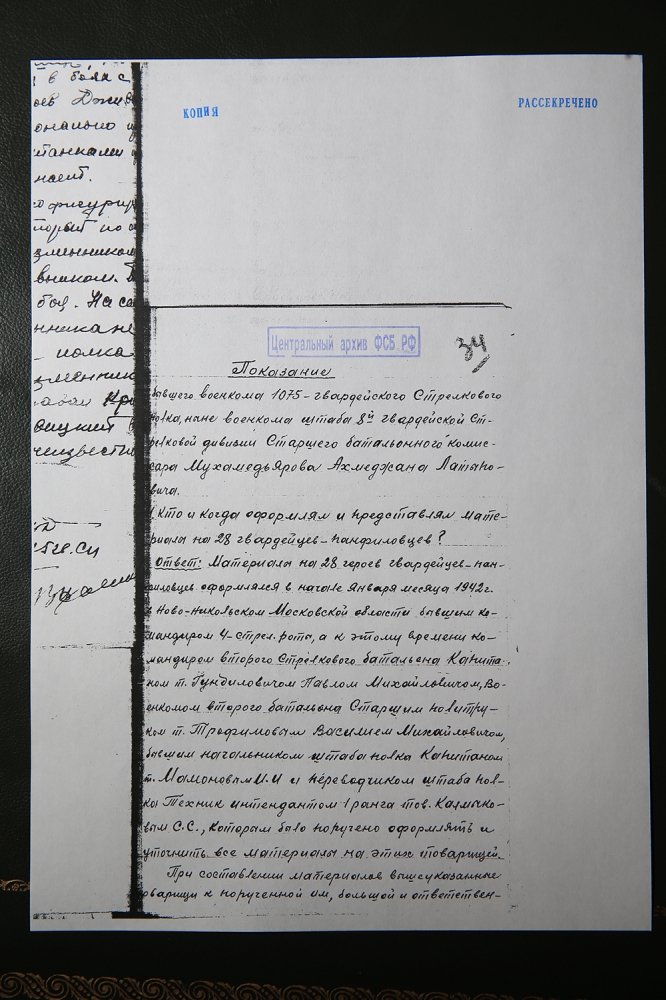
Here are new testimonies. The features of the documents have been preserved (except for obvious spelling mistakes).
Testimony of the former military commissar of the 1075th Guards Rifle Regiment ... senior battalion commissar Mukhamedyarov Akhmedjan Latypovich.
The question is: where and when did the 28 Panfilov’s men fight with tanks and who exactly led the fight?
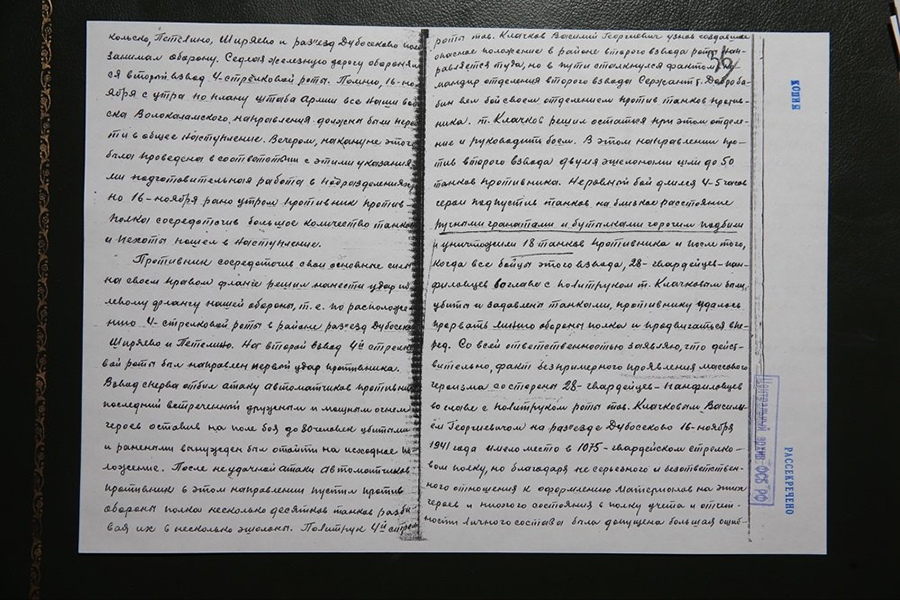
The answer is the following, “Having concentrated its main forces on its right flank, the enemy decided to strike at the left flank of our defense, i.e. at the location of the 4th Rifle Company in the area of Dubosekovo, Shiryaevo and Petelino. The second platoon of the 4th Rifle Company received the first hit. The platoon first repulsed the attack of the enemy. The latter, countered by a powerful fire of the heroes, was forced to withdraw to its original position, leaving up to 80 men killed and wounded on the battlefield. After the unsuccessful attack of machine-gunners the enemy launched against the regiment's defense several dozens of tanks, which were spread in several echelons. The Political instructor of the 4th rifle company comrade Klochkov learned about the dangerous situation in the area of the 2nd platoon and went there ... Up to 50 enemy tanks moved against the 2nd platoon in two echelons. The unequal fight lasted 4-5 hours. The heroes let the tanks get as close as possible and destroyed 18 enemy tanks using hand grenades and bottles of fuel. After they were killed, the enemy managed to break the defense line of the regiment and move forward.”
Recently declassified FSB archival materials, another historical sensation.
I declare with full responsibility that the fact of unprecedented demonstration of mass heroism of 28 Panfilov’s men led by the political instructor Vasily Georgievich Klochkov, took place in 1075th Guards Rifle Regiment on November 16, 1941 on Dubosekovo passing track..." Highlighted by me.
Next.
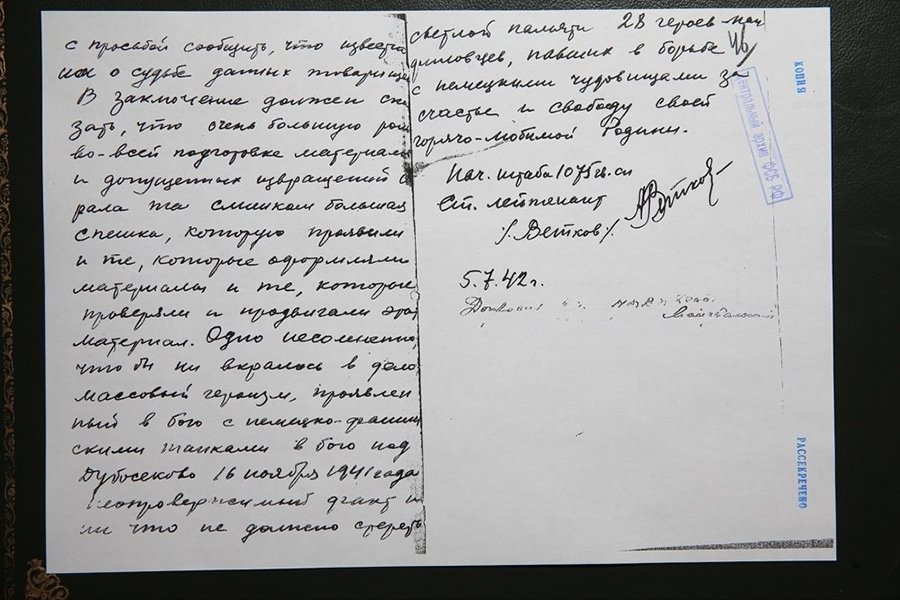
Testimony of Senior Lieutenant Andrey Akimovich Vetkov, Chief of Staff of the 1075th Guards Regiment
... great haste shown by both those who were preparing the materials and those who were checking and promoting these materials played a huge role in all the preparation of the materials and the perversions that were made. One thing is certain, the mass heroism shown in the battle against Nazi tanks near Dubosekovo on November 16, 1941 is an irrefutable fact and nothing should erase the memory of the 28 Panfilov’s men who died fighting the German monsters for the happiness and freedom of their dearly loved homeland.
Vetkov speaks confidently of only one thing: the deed itself. When it comes to inaccuracies in the award list, he gets lost. The investigation held in 1942 was clearly looking for the negligent attitude to the award documents, inaccuracies of names, etc. But it faced objective difficulties - it was impossible to interrogate the executors, who spoke with Krivitsky. The commander of the 4th Rifle Company Gundilovich was killed, the others were wounded and in hospitals, far away.
This short note from the case speaks well of the real heat of the battles, during which articles were prepared and award documents were drawn up, and of the tenacity of the Panfilov Division's fighters:
"From the staff of the 4th company of the 1075th Guards Rifle Regiment, which took part in the battles at Dubosekovo crossing on 06.07.42, the former petty officer of the 4th company Philippe Trofimovich Jivago serves in the regiment as deputy chief of staff. There are no other soldiers of the 4th Rifle Regiment here".
So. By the summer of 1942 there was only one (one!) soldier left in the ranks from the rifle company of October 1941.
The former regiment military commissar Mukhamediyarov also tells how Krivitsky worked (Testimony of 05.07.42, interrogated by a captain, chief of the NKVD of the 8th gv. platoon):
"During the stay of the representatives of the newspaper "Krasnaya Zvezda" (The Red Star) by permission of the division command, they, together with Colonel Kaprov, the head of the division political department, senior battalion commissar Golushko and the second battalion commander Captain Gundilovich, traveled to the battle area where 28 heroes were killed, the crossing Dubosekovo. When they returned, they said that they found the bodies of all 27 heroes in the trenches. They buried them with all the military honors. But the body of political instructor V.G. Klochkov wasn’t there. The locals, who knew him well, secretly found his body and buried it behind the gatehouse of the patrolman of the Dubosekovo passing track. On the basis of these materials the article by Krivitsky and poems by Tikhonov, Svetlov and others were written...
The 28 heroes of the Panfilov Guards were mostly from the second platoon of the 4th Rifle Regiment, commanded by Captain Gundilovich and political instructor t. Klochkov..."
Captain Gundilovich had already commanded a battalion in January and died in April. At first it was thought that all 28 Panfilov’s men died. The number of bodies found was about the same. There was apparently no identification. Then we learned that some survived. We found one of the already "dead" 28 seriously wounded in the hospital and questioned him in detail about the battle.
"One of the heroes, comrade Ivan Moiseevich Natarov, who, being seriously wounded, was hospitalized and later died, told about the mass heroism shown and the unparalleled bravery and courage of the 28 Panfilov’s men" (testimony of Mukhamedyarov).
The numbers don’t really add up. Exactly how many were there? At what point in the battle? How many of the 130 men were still alive - and at which point in the tank attack? But all this "reward arithmetic" just couldn’t add up, especially, given the situation ... It’s clear that under the snow on the battlefield there were also those whose names we will never know. Each of them probably fought heroically and is worthy of an award. It’s clear that some of the 28 who were awarded "posthumously" remained alive in the end. Someone might have appeared in this list by chance and didn’t take part in the battle on that day. Let's admit, it’s possible. But the main thing is that that legendary battle turned out to be even more realistic than we thought it was.
Our fallen are like sentries
Have you ever wondered why "new" details about the 28 Panfilov’s men, Zoya Kosmodemyanskaya, Gastello, the pioneer-heroes, the Young Guard, Alexander Matrosov, are being repeatedly recounted? Why people are constantly trying to negate their exploits in one way or another? They say the writers lied, stirred up the Soviet propaganda, and that all of them were schizophrenic at best, or even policemen. Why can’t the debunkers of historical myths calm down after so many years?
I think this is why. Russia is a country of heroes. Our historical destiny has defined a special Russian type of fortitude. Its highest manifestation is sacrifice. The 28 heroes, Zoya, Matrosov, and the Young Guard were all holy martyrs beyond the religious context. This is our spiritual matrix. By the examples and names of these civic saints the national identity, the civil and historical unity of the country is being held.
Do you think serious historians argue around the 28 heroes, Zoya and Matrosov? No! Scientists know there’s no basis for serious scientific disputes. These disputes aren’t about science, but about ideology. You can puff up your cheeks all you want, presenting yourself as a fighter for historical truth, against "Soviet mythology"... But in reality, it’s a fight for your material well-being, for the right to dictate to an audience the values beneficial to themselves, which somehow don’t want to coincide with the values of the people. I don’t want to write about the Crimea, Donbass, multiculturalism, historical tolerance, all-forgiveness, "money"… about the things you already understand... Let's return to "Smersh".
"Smersh" assured
Back then, in 1942, while the case was dragging on, the counter-intelligence service found one more Panfilovite alive. His testimony is also in the precious folder.
The private Vasilyev wasn’t a prisoner, he didn’t look like a swindler, he was shell-shocked and simple ("I came home to my wife, she was surprised to see me, as she thought I wasn’t alive"). He was also awarded the title of Hero of the Soviet Union (posthumously). He also recounted the course of the battle very accurately before his concussion.
There are inaccuracies, creative exaggerations. But that's on paper. And in life there was a great feat.
Another important text.
"Confidential: the autobiography of Illarion Romanovich Vasilyev, the Red Army soldier of the Ashgabat transit point
...In the morning of November 16, 1941 the Germans led attack on our defence. At first the bombardment from the enemy planes started, mainly of the right flank ... Political instructor Klochkov ordered us to go out of the trenches through the passable cracks. He said that we were the only ones left and that we would fight to the last man...
Half an hour later, the German infantry of the submachine gunners started approaching us. We let them within 30-40 meters, opened fire, killed more than 70 people and forced them to retreat. After that German tanks came at us, there were about 20-25 of them. After receiving the command to prepare bundles of grenades and prepare bottles with combustible liquid, we crawled up to the tanks and put bundles of grenades under the tracks and threw bottles with combustible liquid into the slots of the tank crews. We destroyed a large group of tanks. I remember that five tanks were hit on the left flank, where I was.
After the first tank attack was repulsed, another 30 German tanks moved against us. We fought back. I don’t remember the end of the operation, as I was heavily contused on my left side and regained consciousness in the hospital in Orekhovo-Zuevo... I got there with contusion, four wounds on my side, a wounded leg and two wounds in my arm. I got healthy there.
RIGHT: The head of the 6th Department of the NKVD Department
Junior Lieutenant of State Security (signature). September 1942
The wounded hero even cited Klochkov,"There was nowhere to retreat”. Later Krivitsky was incriminated that he made them up.
And the very last sheet is this one.
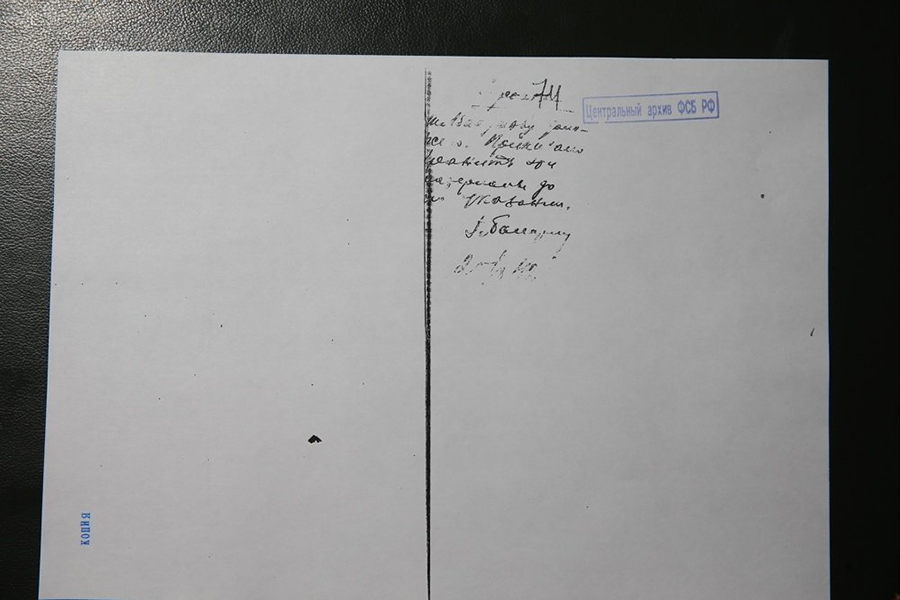
"Synopsis. Investigation materials and reports on the investigation are filed in the case file. There are no people to be taken on operational records according to the materials of the case. Deputy Chief of the department of the Main Directorate of Counterintelligence "Smersh". Major (signature) 13/XII 44".
They studied it, closed the case, and didn’t punish anyone. There was nothing to be punished for: there were some inaccuracies, some creative exaggerations.
But that's on paper. And in life it was a great deed.
In the winter of 1941-1942 the "story about the 28 heroes" became known all over the country.
And when the first fighter stepped out of the trench, keeping their feat in his heart and Krivitsky's article (published in a million copies) in a separate small book - in his shirt pocket, towards death and immortality, all journalistic inaccuracies and exaggerations stopped being important.
And there was one more Panfilov’s hero in the country.
And millions became Panfilov’s heros.